
Notre Dame de Namur MFT Programs
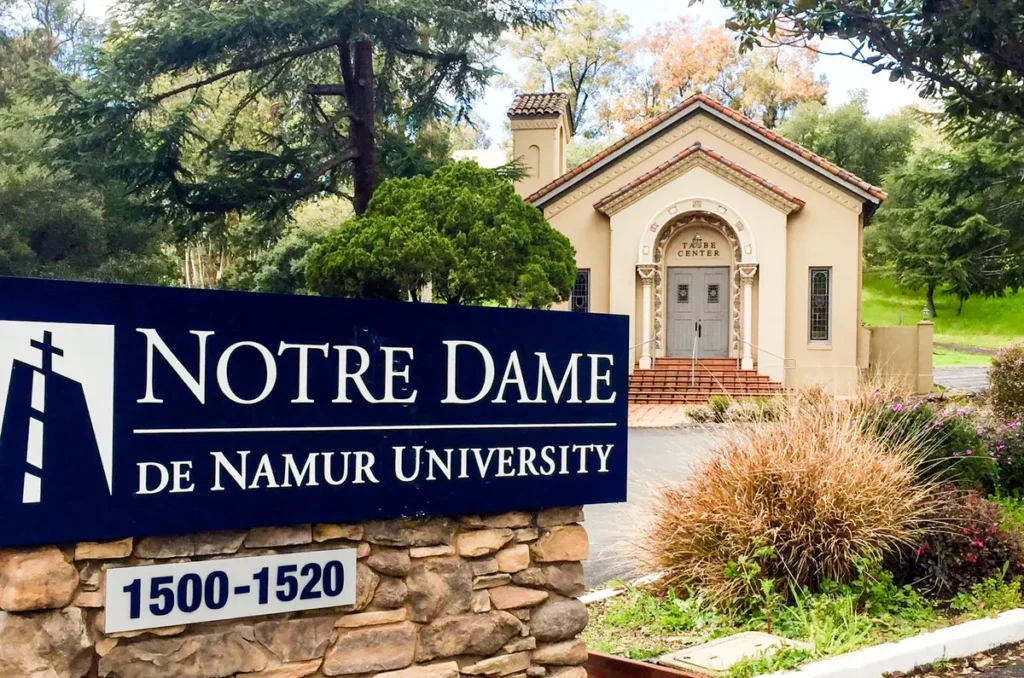
Looking for trusted MFT programs in California that lead to rewarding careers? Mental health professionals can earn between $50,000 and $175,000+ based on their location, experience, and qualifications. Notre Dame de Namur University provides complete programs that help you become a licensed marriage and family therapist. These programs also create pathways toward doctoral studies.
NDNU’s California MFT programs show their steadfast dedication to community service by providing over 20,000 hours of mental health services across the state. The standard 60-unit MS/CP/MFT program takes 2-3 years to complete. Students can also choose a specialized 67-unit MS/CP/MFT/LPCC program that makes shared licensure possible as both a marriage and family therapist and professional clinical counselor. Dual licensure expands your ability to help clients with various mental health concerns.
The programs align with all California Board of Behavioral Sciences requirements and consistently achieve high first-time pass rates on licensing exams. This guide will help you find program specifics, specializations, learning options, and reasons why NDNU could be your ideal choice for professional growth in therapy and counseling.
MFT Program Snapshot
Notre Dame de Namur University offers two complete clinical psychology programs that help students get professional licensure in California. Students pursuing licensure as marriage and family therapists can enroll in the standard MS/CP/MFT track with 60 units. The MS/CP/MFT/LPCC track needs 67 units and prepares graduates to get both MFT and LPCC licenses, which makes them more marketable nationwide.
Students can finish both programs in 2-3 years. These programs meet California Board of Behavioral Sciences (BBS) requirements for licensure. The programs’ high first-time pass rates for licensing exams show how well they prepare students for clinical practice.
NDNU’s Clinical Psychology Department has trained mental health professionals throughout California and the Bay Area for nearly five decades, earning its reputation as “the practitioner’s program”. The curriculum focuses on:
- An integrated, depth-oriented psychological approach
- Hands-on clinical training with theoretical understanding
- Student participation and diversity in all learning aspects
Students get exceptional flexibility with multiple learning options. Working professionals can attend courses during late afternoon, evening, and weekend hours. The program offers 100% online synchronous courses or in-person classes, but note that students cannot complete their degree through asynchronous online courses alone.
WSCUC (WASC) has fully accredited these programs. The faculty makes these programs special – they are experienced clinicians and mental health professionals who “practice what they teach” and actively contribute to the community. This practitioner-scholar model gives students theoretical knowledge and practical skills they can use in clinical settings.
On top of that, NDNU provides tailored attention through individual advising. Students can progress at their own pace while moving through the program in loose cohorts with their peers.
Pathways and Specializations
NDNU’s School of Psychology gives students a choice between two distinct educational pathways that match their career goals. Students can prepare for licensure as a marriage and family therapist through the standard 60-unit MS/CP/MFT program. Those who want more versatility in their clinical practice can pursue the 67-unit MS/CP/MFT/LPCC program to get dual licensure as both an MFT and a licensed professional clinical counselor.
Dual licensure comes with major advantages. The LPCC credential has broader national recognition throughout the United States. This makes the program valuable for practitioners who might work across state lines or need maximum job flexibility.
Both programs build excellent foundations for future doctoral studies. The curriculum blends various therapeutic modalities and takes an all-encompassing approach to mental health that addresses patient needs of all types.
NDNU’s MFT programs stand out because of their practitioner-focused orientation. Faculty members who actively practice in the field bring their ground experience to the classroom. Students get great hands-on training through:
- Year-round Supervised Field Experience that starts after just 12 graduate units
- Year-long practicum immersion at clinical sites where students apply knowledge under experienced supervision for about 15-20 hours weekly
The detailed curriculum covers key topics for effective clinical practice:
- Individual, couple, family, child, and group therapy
- Assessment and ethics
- Addictions and trauma treatment
- Cross-cultural issues
- Positive psychology
- Wellness and spirituality approaches
- Expressive arts therapy
The program also lets students choose elective courses in specialized areas like coaching, business psychology, organizational psychology, and consulting. Students can line up their education with specific career goals and interests. The program’s Director of Clinical Training, an experienced clinical psychologist, helps meet individual clinical training needs through established placements that count toward MFT licensure.
Learning Options and Flexibility
NDNU’s MFT programs in California give students exceptional scheduling flexibility that works well for working professionals. Weekly classes meet at two convenient times: 4:30-6:45 PM and 7:00-9:15 PM. Students can keep their day jobs while pursuing their education with this evening-focused schedule.
Some courses follow an intensive weekend seminar format instead of weekly meetings. These specialized sessions span several weekends each semester. Students can dive deep into complex topics without weekly class commitments through this arrangement.
The program offers flexible completion timelines. MFT licensure requires 60 units, while dual MFT/LPCC credentials need 67 units. Dedicated students might finish in 2.5 years, but most take about 3 years to graduate. Part-time students often need more time to balance their personal commitments.
NDNU lets you choose from these learning options:
- 100% In-Person Learning: Traditional on-campus experience with face-to-face instruction and hands-on learning
- 100% Online Learning: Available in two formats:
- Synchronous: Live virtual classes with real-time discussions and faculty interaction
- Asynchronous: Self-paced learning with pre-recorded materials
Some program components need live participation, so a fully asynchronous approach isn’t possible. The program matches your specific goals and circumstances through individual academic counseling.
Asynchronous components follow an 8-week structure during Fall and Spring semesters (Term I and Term II). Students must complete all coursework by term end. Professors might conduct 30-40% of in-person classes online to add more flexibility.
Students can choose afternoon (4:30-6:45 PM), evening (7:00-9:15 PM), or weekend (9:30 AM-3:30 PM) classes that fit their schedule. This flexible structure makes California MFT programs at NDNU available to students who juggle work and personal commitments during their educational trip.
Admission Requirements
Planning to apply for MFT programs in California? Notre Dame de Namur University’s fall term application deadline is August 1st, which gives you plenty of time to get your materials ready. The admissions team looks at both your academic record and personal qualities.
You need these academic requirements:
- Bachelor’s degree from a regionally accredited institution
- A GPA of 3.0 or higher works best, but 2.5-3.0 might work too
- Two psychology prerequisites: General Psychology and Abnormal Psychology (3 units each)
NDNU takes a different approach than most graduate schools. They don’t ask for GRE scores for the MFT program, which makes it easier for many students to apply. The university reviews each application comprehensively.
Your application needs to include:
- Official transcripts from every college/university you’ve attended
- Resume or curriculum vitae
- Two references with their contact details (you don’t need actual letters)
- Some programs need an autobiographical statement
You’ll also need to talk with the department chair. This interview lets you share your background and career goals. If English isn’t your first language, you’ll need to submit TOEFL scores with a minimum of 550.
The simple requirements help qualified students access quality clinical psychology education easily.
Why Choose This Program
Looking for MFT programs in California? NDNU has several unique features that graduates keep praising. The university shows high first-time pass rates for MFT/LPCC licensing exams. Students get thorough preparation through a curriculum that balances hands-on skills with theoretical knowledge.
The program’s welcoming community makes a lasting impression on alumni. As one graduate noted, “I was welcomed with such warmth and open arms by my professors and fellow colleagues”. Another shared, “The amount of knowledge gained, support given, and community created by the staff is incomparable”.
NDNU’s strength lies in its faculty of working practitioners. These “professors who practice what they teach” bring their daily clinical experience to the classroom. For almost 40 years, people have known it as “the practitioner’s program”.
The program’s dedication to mental health training shows in its community work. NDNU provides over 20,000 hours of mental health services throughout California. This hands-on experience helps graduates succeed in various careers – from private practice to community mental health, hospitals, schools, and nonprofit organizations.
Strong practicum partnerships and networking opportunities help students transition smoothly into professional roles. NDNU offers more than just a degree – it provides comprehensive training that has shaped California’s mental health professionals for decades.